Selected Work
My research sits at the intersection of causal inference, machine learning, and global development. Rather than list everything, this page highlights selected work grouped by theme, each with a visualization that captures the core idea. For the complete and always-current list of publications, see my Google Scholar profile.
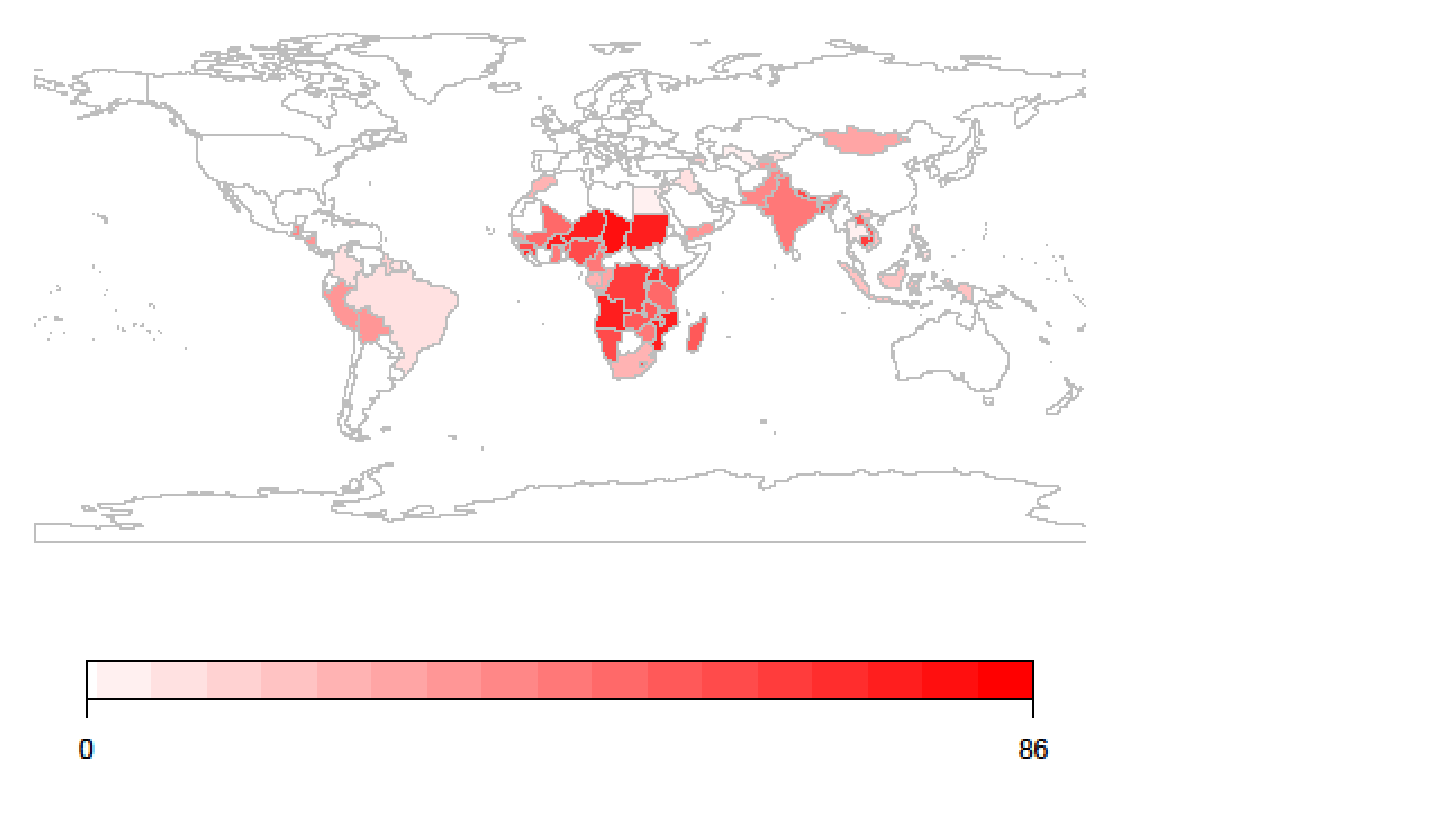
The IMF, austerity, and children
Loan programs from the International Monetary Fund reshape the budgets of borrowing governments, often through austerity. In a series of studies I trace how these conditions ripple down to the health and welfare of children, and ask what a fairer set of policies would look like.
- Daoud, Nosrati, Reinsberg, Kentikelenis, Stubbs & King, “Impact of IMF programs on child health,” PNAS, 2017. DOI →
- Daoud & Reinsberg, “Structural adjustment, state capacity, and child health: Evidence from IMF programs,” International Journal of Epidemiology, 2018.
- Daoud, Reinsberg, Kentikelenis, Stubbs & King, “The IMF’s Interventions in Food and Agriculture,” Food Policy, 2019. DOI →
- Daoud, Herlitz & Subramanian, “IMF fairness: Calibrating the policies of the IMF based on distributive justice,” World Development, 2022. DOI →
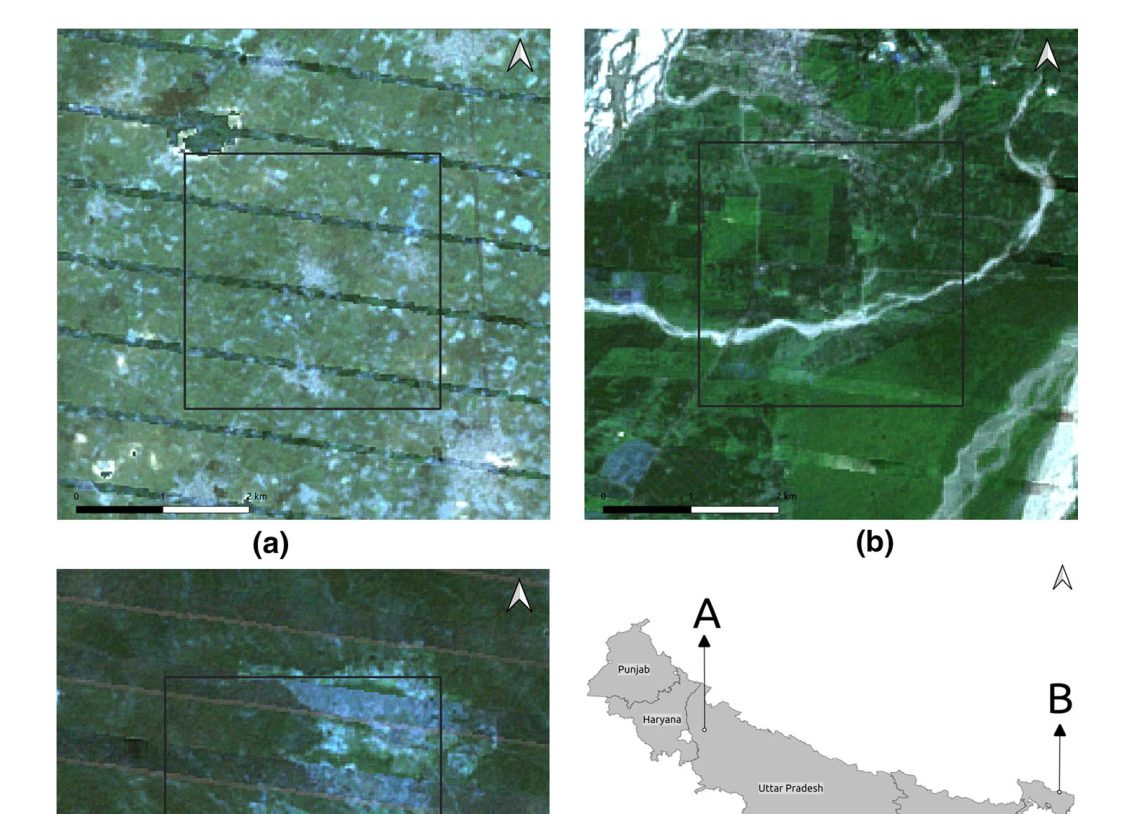
Seeing poverty from space
Surveys and censuses are expensive and quickly go out of date. With co-authors I train deep learning models to read satellite imagery and estimate living standards at fine spatial resolution, building proxies that extend social measurement to places and times where survey data are missing.
- Daoud, Jordan, Sharma, Johansson, Dubhashi, Paul & Banerjee, “Using satellite images and deep learning to measure health and living standards in India,” Social Indicators Research, 2023. DOI →
- Kakooei & Daoud, “Increasing the confidence of predictive uncertainty: earth observations and deep learning for poverty estimation,” IEEE Transactions on Geoscience and Remote Sensing, 2024. DOI →
- Pettersson, Kakooei, Ortheden, Johansson & Daoud, “Time series of satellite imagery improve deep learning estimates of neighborhood-level poverty in Africa,” IJCAI, 2023.
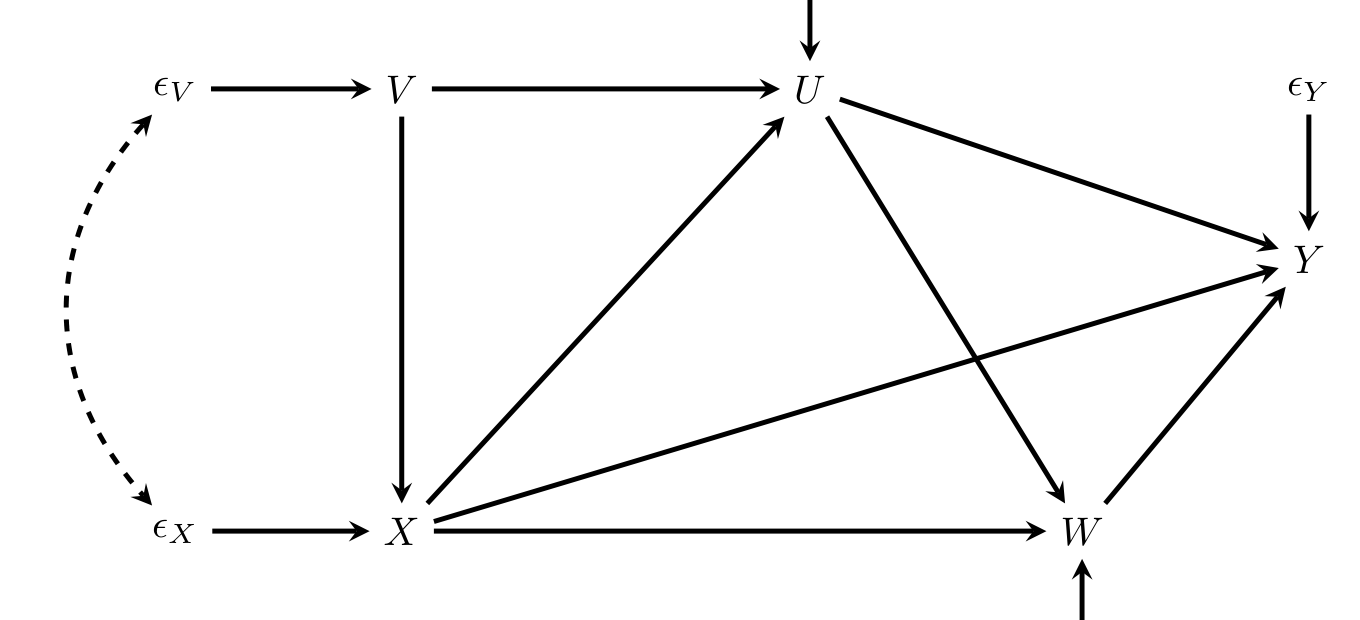
Causal inference with machine learning
Much of my methodological work asks how machine learning can serve causal questions rather than mere prediction. These papers develop tools for encoding causal assumptions as graphs, estimating heterogeneous effects, and clarifying when learned models can and cannot support causal claims.
- Balgi, Daoud, Peña, Wodtke & Zhou, “Deep Learning with DAGs,” Sociological Methods & Research, 2025.
- Daoud & Dubhashi, “Statistical Modeling: The Three Cultures,” Harvard Data Science Review, 2023. DOI →
- Jerzak, Johansson & Daoud, “Image-based Treatment Effect Heterogeneity,” CLeaR, 2023.
- Daoud, Jerzak & Johansson, “Conceptualizing Treatment Leakage in Text-based Causal Inference,” NAACL, 2022.
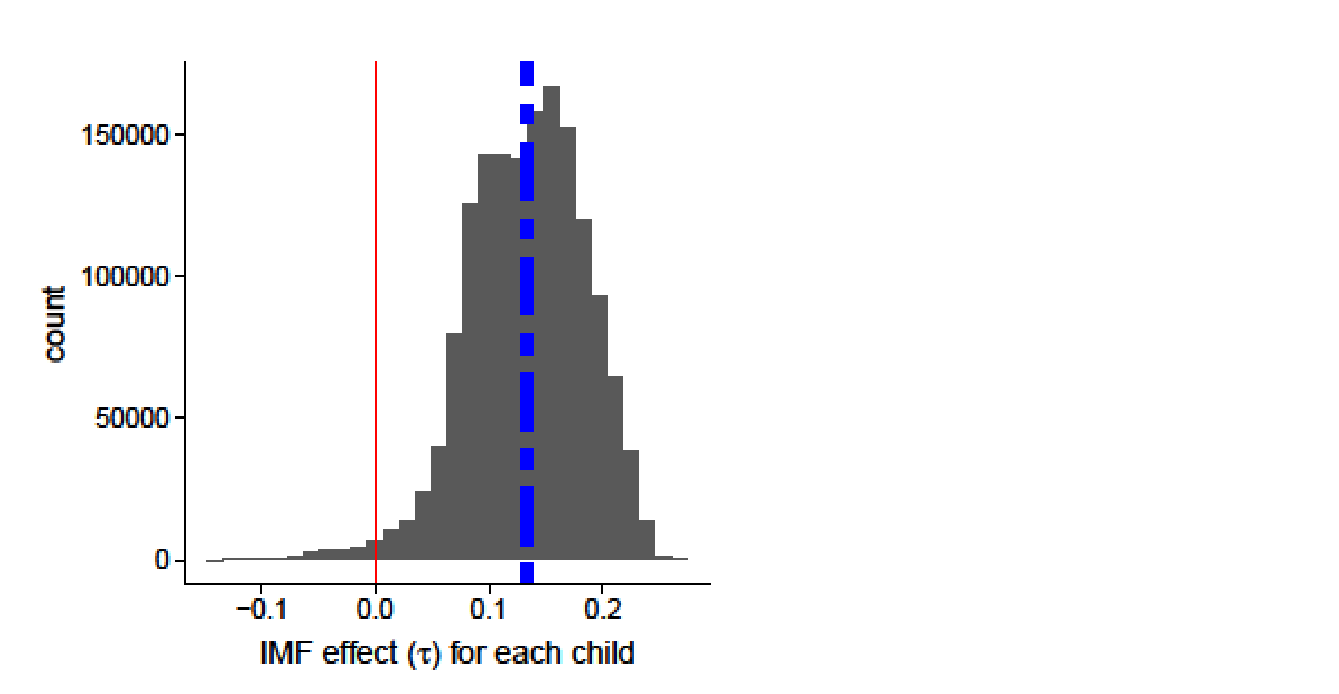
Beyond the average: disasters, austerity, and uneven effects
An average effect summarizes a whole population in a single number, which can obscure real differences between people. Using machine learning to estimate effects at the individual level, these studies examine how the consequences of disasters and austerity vary from person to person, and how to recover that variation from data.
- Shiba, Daoud, Hikichi, Yazawa, Aida, Kondo & Kawachi, “Heterogeneity in cognitive decline after a major disaster: a natural experiment study,” Science Advances, 2021. DOI →
- Daoud & Johansson, “The Impact of Austerity on Children: Uncovering effect heterogeneity in low- and middle-income countries,” Social Science Research, 2024.
- Shiba et al., “Long-term Associations Between Disaster-related Home Loss and Health and Wellbeing of Older Survivors,” Environmental Health Perspectives, 2022. DOI →
Scarcity, abundance, and sufficiency
Before the empirical work, a conceptual question motivated me. What do we actually mean by scarcity? These papers reconstruct the idea across economics and sociology, and connect it to abundance and sufficiency as alternative ways of relating human wants to available resources.
- Daoud, “Unifying studies of Scarcity, Abundance, and Sufficiency,” Ecological Economics, 2018. DOI →
- Daoud, “A Framework for Synthesizing the Malthusian and Senian approaches: the 1943 Bengal Famine,” Cambridge Journal of Economics, 2017. DOI →
- Daoud, “(Quasi)Scarcity and Global Hunger: A Sociological Critique of the Scarcity Postulate,” Journal of Critical Realism, 2007.
This is a curated selection. For the full and continuously updated list of publications, including working papers and conference proceedings, visit my Google Scholar profile.